TheMoSiA 2026
Theory, Modelling, Simulation at the Atomic scale
|
|
|
Program > Invited Speakers
The scientific committee has selected invited speakers, among them invited speakers and 6 speakers for long communications. Note that, among the abstracts submitted for a short communication, six additionnal speakers will be upgraded to present a Long communication.
Plenary Speakers (by alphabetic order):
 |
Eric Cancès, Ecole des Ponts - IP Paris and Inria, Marne-la-Vallée. He mainly works on the mathematical analysis and numerical simulation of models for quantum and classical molecular simulation, with applications in Chemistry and Materials Science. |
 |
Carmen Domene, University of Bath, UK. Using MD simulations and molecular modeling, her group explores ion channels, membrane transport proteins, and other macromolecules, emphasizing ion permeation, gating, selectivity, conformational dynamics, and binding energetics. |
|
|
Natacha Gilet, ENS Lyon, Lyon.
She uses MM-MD and QM/MM MDs simulations to explore structure-properties relationship in biomolecules, focusing more on nucleosomal DNA. She is gender equality referent at Chemisty Labo of ENS de Lyon, and she is interested and involved in issues relative to inclusivity and minorities visibility in science and to a better accessibility of computational chemistry tools and results. |
|
|
Hazar Guesmi, Institut Charles Gerhardt de Montpellier, Montpellier.
She develops multiscale simulations to unravel the nanoscale structure, dynamics, and surface reactivity of catalytic materials under realistic conditions. |
 |
Mikaël Kepenekian, Institute of Chemical Sciences, Rennes.
He is a computational chemist dedicated to the investigation of compounds (molecules or solids) exhibiting magnetic, electronic or optical properties with various tools ranging from wavefunction-based multireference approaches (e.g. CASSCF), density functional theory (DFT) based calculations or non-equilibrium Green's functions (NEGF). |
 |
Eleonora Luppi, Laboratoire de Chimie Théorique, Paris. She develops theoretical and computational methods and their applications for exploring electronic properties of molecular and material systems under irradiation. |
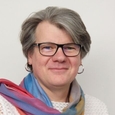 |
Marie-Eve Perrin, Institute of Molecular and Supramolecular Chemistry and Biochemistry (CBMS), Lyon. She focuses on the interplay between experiments and theory for polymerization and multistep organic reactions catalyzed by organometallic species. |
 |
Anthony Scemama, Laboratoire de Chimie et Physique Quantiques (LCPQ), Toulouse.
High-performance computing for accurate electronic structure calculations, focusing on quantum Monte Carlo and selected configuration interaction (selected-CI) methods. Developer of the Quantum Package code for selected-CI and the TREXIO library for efficient, portable wave function data storage. |


Long Communication speakers (by alphabetic order):
 |
Grégoire David, Institut des Sciences Chimiques de Rennes, Rennes. His research focuses on the treatment of magnetic phenomena using mean-field-based approaches, with an emphasis on density functional methods to leverage the strengths of single-determinant approaches for handling open-shell systems by exploiting spin symmetry breaking. |
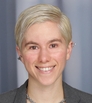 |
Maria Drosou, Technische Universität Darmstadt, Darmstadt. She focuses on applications of quantum chemistry and computational spectroscopy to study the electronic structure, magnetism, photochemistry, and reactivity of complex molecular systems, with an emphasis on bio-inspired transition metal catalysis and photosynthesis. |
 |
Kateryna Goloviznina, Institut de Chimie Séparative de Marcoule. She is an expert in classical and ab initio molecular dynamics applied to densely charged fluids, such as ionic liquids, deep eutectic solvents, electrolytes and high-temperature molten salts. Her research currently focuses on metal ion separation in the context of recycling of metals, involved in the nuclear cycle or coming from the urban mines. |
 |
Lea Maria Ibele, Institut Chimie Radicalaire, Marseille. Her research focuses on nonadiabatic molecular dynamics, both on method development in particular towards radiative processes, as well as on applications to photochemical problems in synergy with time-resolved experiments. |
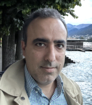 |
Hamed Khakzad, Inria Centre at Université de Lorraine - team Delta, Nancy. He is building dynamic-aware deep learning models to predict macromolecular interactions and functions, and to design novel therapeutics. |
 |
Saad Yalouz, Laboratoire de Chimie Quantique, Strasbourg. His researchers is at the intersection of theoretical quantum chemistry and physics and spans multiple directions within quantum sciences and technologies. |
List of speakers upgraded to a Long communication by the Scientific Committee:
- Alicia Da Piedade Vieira, Laboratoire Modélisation et Simulation Multi-Echelle, Marne La Vallée
- Thomas Boukeke-Lesplulier, Institut de Chimie Physique, Orsay
- Bastien Anézo, Institut des Matériaux de Nantes Jean Rouxel, Nantes
- Iris Wehrung, Institut des Sciences Moléculaires de Marseille, Marseille
- Parfaite Senou, Ecole Nationale Supérieure de Chimie de Paris, Paris
- Fábris Kossoski, Laboratoire de Chimie et Physique Quantiques, Toulouse


